We live in a new economy. The industrial age built wealth with factories, machines, and physical labor. The information age builds wealth with data, software, and networks.
Factory work still exists, of course. The U.S. still employs millions of people in manufacturing. But the center of gravity has shifted. Information is now the most valuable worker in the economy. So the real question is: how can you use it?
It Starts With the Web
Websites, servers, databases, and hosting companies are the foundation of the information economy. They’re the gateway to everything else.
The web is how people interact with data. It’s how you funnel attention toward a digital business, build an audience of a million people, and sell to customers around the world while you sleep. Every major internet company started here, and so does every small online business.
The barrier to entry has never been lower. Hosting costs a few dollars a month. Platforms like WordPress, Shopify, and website builders let you launch in an afternoon. What used to require a development team and a big budget is now available to anyone willing to learn. The hard part isn’t building the website anymore. It’s building something people actually want and getting it in front of them.
Artificial Intelligence: Not the Terminator
When people hear “artificial intelligence,” a lot of them still picture Skynet and the Terminator. That’s Hollywood, and we all know how real Hollywood is.
What AI actually does is help us generate far more output with far less effort. At its core, it’s machines working with machines. Code talks to other code through APIs, and systems learn from enormous amounts of data to make predictions and decisions.
That’s how Google, Amazon, Facebook, and the other giants built their empires. Google ranks the web. Amazon recommends what you’ll buy next. Meta decides which ad to show you. All of it is data and algorithms working at a scale no human team could ever match.
The Language of the Internet
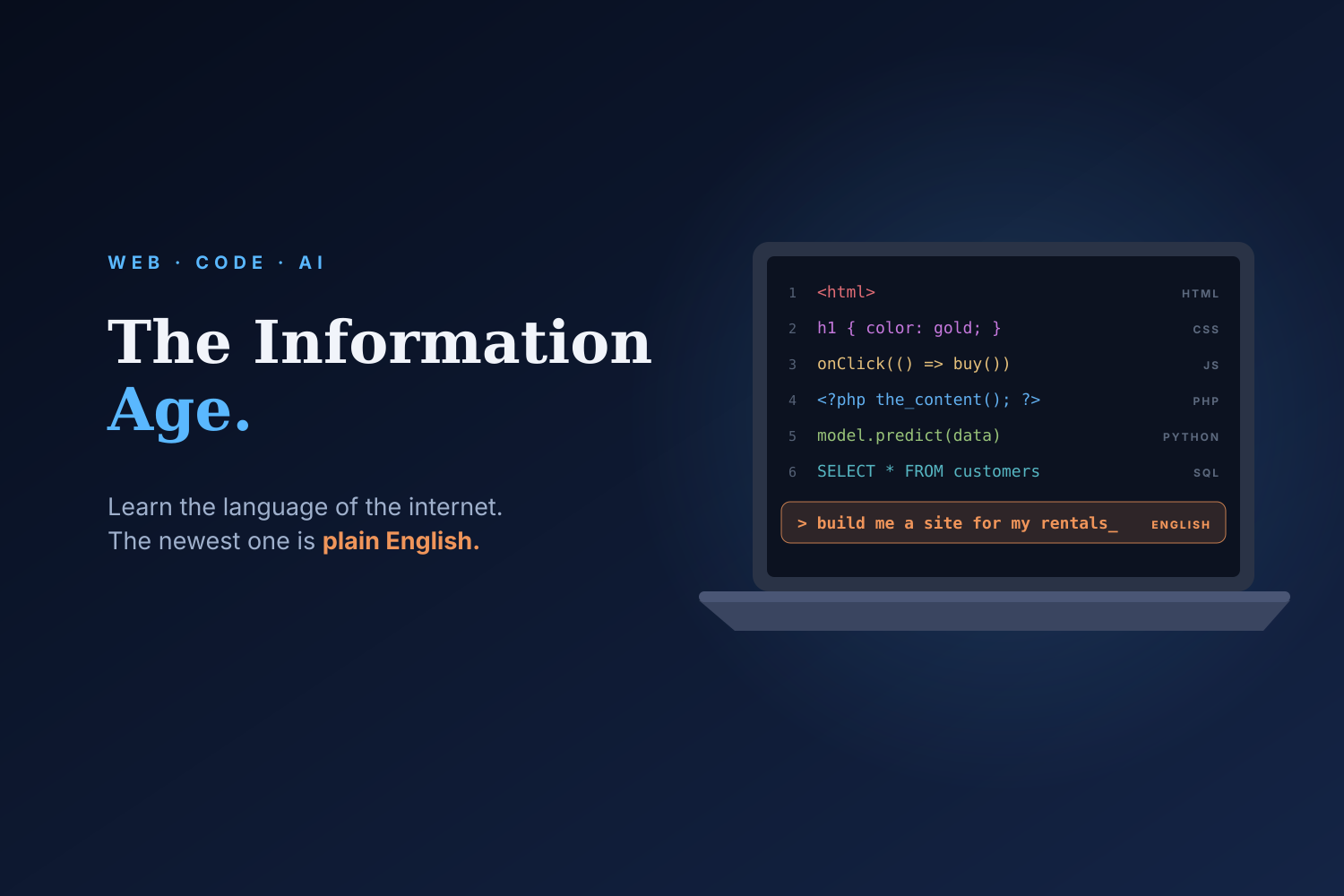
To build things in this world, you need a certain language skill set. Not Mandarin, Japanese, English, or Czech, but the languages that tell computers what to do:
- HTML and CSS: the structure and style of every web page.
- JavaScript: what makes websites interactive.
- PHP: the engine behind WordPress, which still powers a huge share of the web.
- Python: the go-to language for data, automation, and AI.
- Ruby on Rails: a popular framework for building web apps quickly.
- SQL: how you talk to databases.
These languages let you program a computer, build a website, or automate a business. They’re extremely useful for anyone who wants to be an internet entrepreneur.
The Newest Language Is Plain English
Here’s the biggest change since 2018: you can now build a lot of things just by describing them clearly in plain language. AI tools can turn instructions into websites, scripts, reports, and apps.
Does that mean coding skills are useless? Not at all. Knowing the basics helps you:
- Give AI better instructions
- Spot when the AI gets something wrong
- Fix and customize what it builds
- Understand how your business’s technology actually works
The winning skill set today is a mix: understand the fundamentals of how the web and code work, then use AI to multiply your output. Clear thinking and clear communication have become technical skills in their own right.
And What About Blockchain?
In 2018, blockchain was everywhere. Every startup wanted “blockchain” in its pitch deck, and plenty of companies added it to their name just to see their stock jump.
Most of that hype faded. Many crypto projects collapsed, and blockchain didn’t replace the internet the way some people predicted. But the technology didn’t disappear either. A few uses have become part of the mainstream financial system:
- Bitcoin as a digital asset: spot bitcoin ETFs were approved in the U.S. in 2024, putting it in regular brokerage accounts.
- Stablecoins: digital dollars used for payments and transfers, now with a federal framework after Congress passed the GENIUS Act in 2025.
- Tokenization: big financial firms are experimenting with putting assets like funds and bonds on blockchains.
My take: blockchain turned out to be infrastructure, not a revolution. It’s worth understanding, but AI has had a much bigger impact on how everyday businesses operate.
How to Play in the Information Age
If you want to take advantage of this new economy, here’s where I’d start:
- Build a home on the web. A website or blog you own, not just social media profiles you rent.
- Learn the basics of code. Even a little HTML, CSS, and Python goes a long way.
- Get fluent with AI tools. Use them daily, and learn what they’re great at and where they fall short.
- Collect data you own. Email lists, customer data, and audience insights are assets that grow in value.
- Pick a niche. The internet rewards specialists. Be the best at something specific.
- Keep learning. The tools change every year. The people who keep learning keep winning.
The Bottom Line
The industrial age rewarded people who could operate machines. The information age rewards people who can work with data, build on the web, and now, direct AI.
All you need is a laptop, an internet connection, and the willingness to learn the language. The world is literally at your fingertips. What you build with it is up to you.
Leave a Reply