When someone tells you to buy physical gold or silver, they’re usually making a bet on a very specific chain of events. It’s worth understanding that bet before you put a dollar into metals.
The Bet Behind Gold and Silver
The metals bull case usually goes like this:
- A bubble bursts somewhere in the financial markets.
- Stocks and other paper assets drop hard.
- Panicked investors rush to their brokers and pull their money out.
- Fear drives people into “real” assets they can hold in their hands.
- Demand for gold and silver surges, and prices shoot up.
Step three is where most people get hurt. The knuckleheads who sell at the bottom lock in their losses. Any wise man worth his salt will tell you that’s a bad money strategy. Panic selling is how temporary drops become permanent damage.
The Silver Squeeze Theory
Silver bulls take the theory even further. The idea is that if enough investors demand physical silver at once, there won’t be enough metal to go around. Prices would explode in a massive short squeeze, maybe the biggest the world has ever seen.
It’s an exciting story. Here’s what you need to know before you buy into it:
- Silver can absolutely spike. It hit record highs above $50 an ounce in late 2025, and it’s been trading around that level in late 2026.
- It can also crash. Silver is far more volatile than gold. Big run-ups are often followed by sharp drops.
- Most silver ETFs don’t give you the metal. Funds like SLV are backed by physical silver, but regular investors can’t trade in their shares for bars. If you want silver you can hold, you have to buy it directly.
- Physical metal has real costs. Dealer markups, shipping, storage, and insurance all eat into returns.
The squeeze could happen. But betting your future on a once-in-history event isn’t a plan. It’s a lottery ticket with a nice story attached.
The Debt Problem
One reason people worry about a crash is the sheer amount of debt in the economy. And the numbers are big.
U.S. household debt now sits at about $19.1 trillion, according to the New York Fed. That includes:
- About $13.4 trillion in mortgages
- About $1.7 trillion in auto loans
- About $1.7 trillion in student loans
- A record $1.29 trillion in credit card debt
About 5% of that debt is now in some stage of delinquency, and that number is creeping up. On top of that, the federal government is carrying more than $40 trillion in debt.
Debt doesn’t automatically mean a crash is coming. Incomes and asset values have grown too, and most homeowners are locked into fixed-rate mortgages. But high debt does make the whole system more fragile than it looks. When a shock hits, people with a lot of debt and little savings get hurt first.
About Those Crash Signals
Big banks and market analysts love to publish checklists of warning signs: high valuations, rising debt, an inverted yield curve, slowing growth. Every few months, someone announces that most of the signals are flashing red.
These checklists are worth reading. They help you understand where the risks are. But they’re terrible at timing. Warning signs can flash for years while the market keeps climbing. Investors who sell everything at the first red flag often miss huge gains while they wait for a crash that shows up much later, or not at all.
Use warning signs to prepare your portfolio, not to predict the future.
Inflation and the Cost of Food
Here’s the question that matters most to everyday families: will your dollars keep up with the cost of living?
Anyone who’s been to the grocery store in the last few years knows prices jumped hard after 2021. Even when inflation cools, prices rarely go back down. They just rise more slowly. When governments carry a lot of debt, there’s always pressure for currencies to lose value over time.
That’s the real argument for owning assets instead of holding only cash. Cash sitting still loses buying power every year. Assets that produce income or hold value give you a fighting chance to keep up.
So Should You Own Gold and Silver?
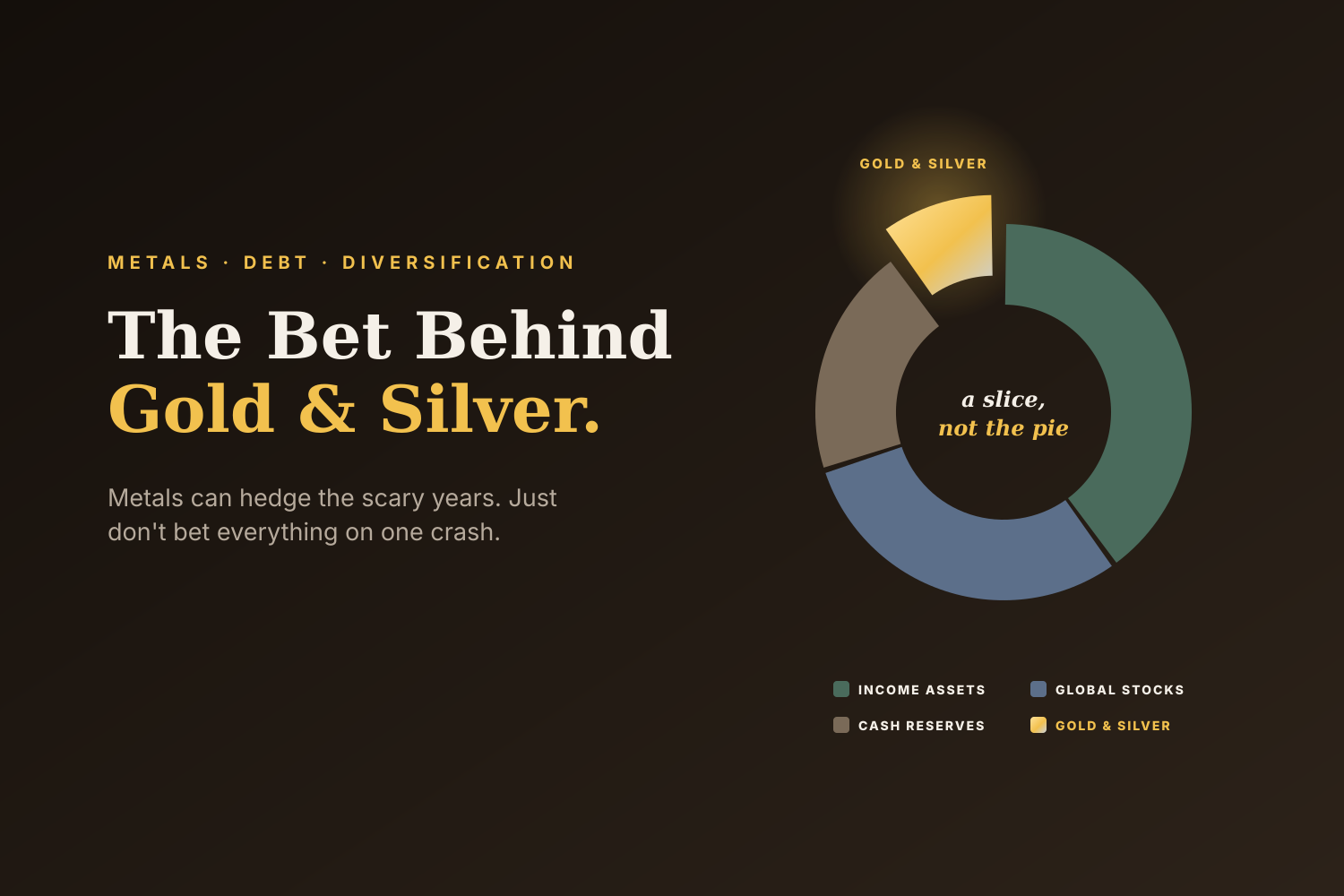
My view: precious metals can be a useful slice of a portfolio, but they shouldn’t be the whole pie.
What metals do well:
- Hold value over very long periods
- Often rise when fear is high and other assets fall
- Can help hedge against currency weakness
What metals don’t do:
- Pay you income. No rent, no dividends, no interest.
- Grow on their own. An ounce of gold is still an ounce of gold in 30 years.
- Move in a straight line. Gold hit an all-time high above $5,600 in early 2026, then fell back below $4,000 by late in the year.
That last point is important. Even “safe” assets swing a lot. Buying at the peak of a fear-driven rally can mean years of waiting to break even.
How I Think About Protecting Wealth
Instead of betting everything on one crash scenario, I prefer to build a portfolio that can handle a lot of different futures:
- Own income-producing assets. Rental properties and dividend-paying index funds pay you while you wait.
- Diversify globally. Own U.S. and international stocks, not just one market.
- Keep cash reserves. Enough to cover emergencies and buy opportunities when others are panicking.
- Hold a small hedge. A modest slice in gold or other real assets can smooth out the scary years.
- Avoid bad debt. High-interest credit cards and car loans are the first things to sink people in a downturn.
- Never panic sell. The biggest losses usually come from emotional decisions, not market drops.
The Bottom Line
Gold and silver bulls are betting on fear, debt, and panic. Those risks are real, and the debt numbers are worth watching. But the investors who come out ahead are rarely the ones who bet everything on a single prediction.
Do your research. Own a mix of assets. Stay calm when everyone else is running for the exits. That’s how real wealth gets built and protected, no matter which way the next storm blows.
Leave a Reply