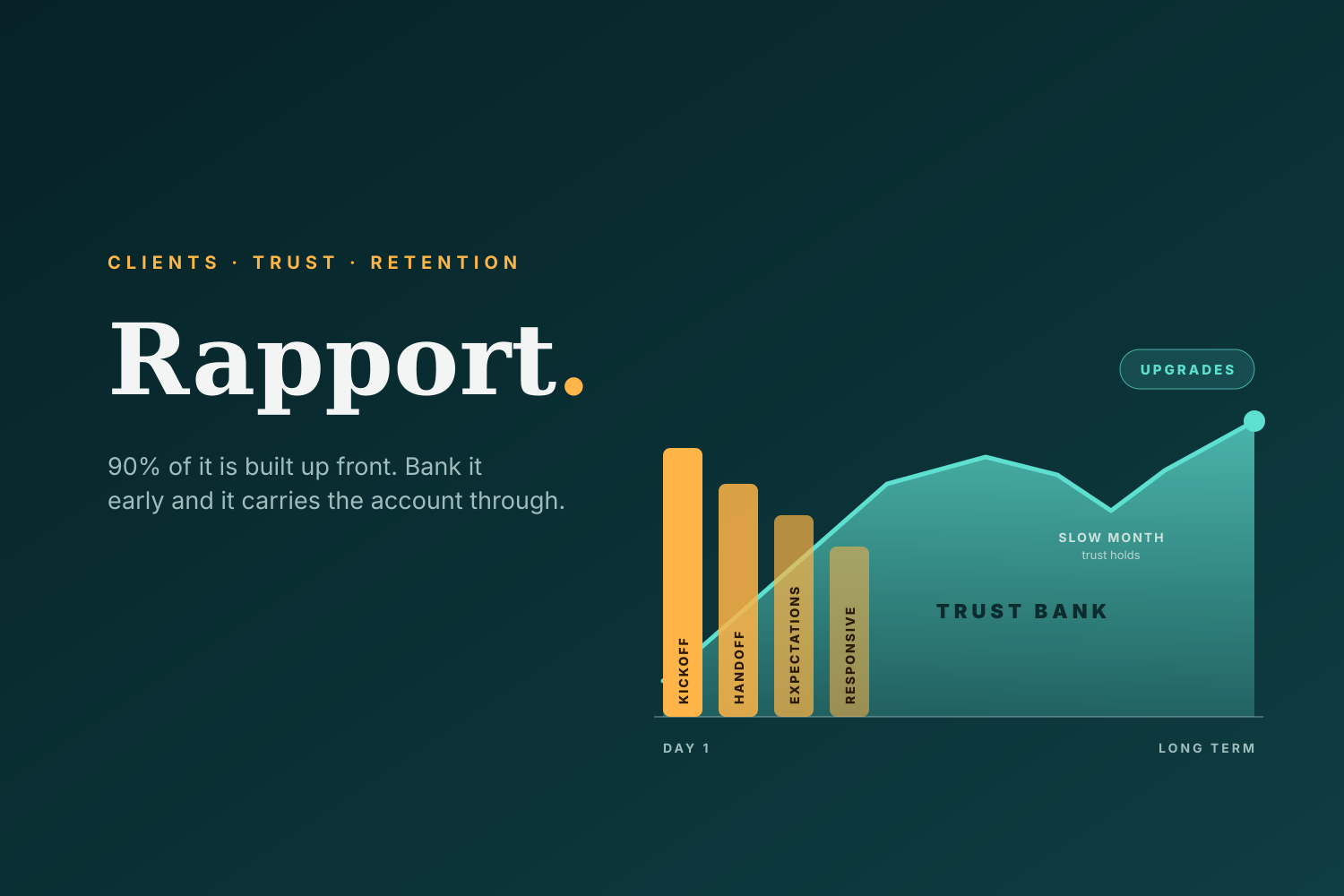
Good rapport keeps clients long term.
After years of managing client accounts, I’m convinced rapport is one of the most underrated skills in marketing and business. Great results get you hired. Great rapport keeps you hired, through the good months and the bad ones.
Rapport Is Built Upfront
For most effective marketers, the bulk of client rapport is built at the very beginning of the relationship.
The early stages are when the other side is paying the closest attention to your every move. They just signed a contract, they’re spending real money, and they’re quietly wondering if they made the right choice. Every interaction either confirms their decision or plants a seed of doubt.
Here’s what clients are watching in those first weeks:
- The kickoff call: do you understand their business, or are you reading from a script?
- Handoffs: when they move from the salesperson to the account team, does anything fall through the cracks?
- Expectation setting: do they know what will happen, when, and what success looks like?
- Early results: are there signs of progress, even small ones?
- Consistency: do you show up the same way every week?
- Responsiveness: how fast do you reply when they reach out?
- Quality communication: are your updates clear, honest, and useful?
This is where most of the rapport gets built. It’s the hard, human work of bonding with people in both professional and personal ways.
Why Rapport Buys You Time
If you get really good at bonding with people right away, and you keep that good energy flowing, client retention improves dramatically.
Here’s the part people don’t like to admit. Even if an account is performing poorly, strong rapport often earns you several more months to turn it around. The client trusts your professional ability and is willing to give you time to prove yourself.
Without that trust, one bad month can end the relationship. With it, a bad month becomes a problem you solve together, as partners.
That doesn’t mean rapport replaces results. It doesn’t. Rapport buys you time, but you still have to use that time to deliver. A client who loves you and never sees results will eventually leave, just more politely. I’ve seen it happen, and it stings more than losing a client you never connected with, because you know the relationship deserved better. The goal is rapport and results, with rapport giving you the runway to get the results right.
My First 30 Days Playbook
Here’s how I approach a new client relationship to build rapport fast:
- Do your homework before the kickoff. Study their website, ads, reviews, competitors, and industry. Show up already knowing the basics.
- Ask about the business, not just the marketing. What are their goals this year? What keeps them up at night? How do they actually make money?
- Set expectations in writing. Recap the plan, timelines, and how you’ll measure success right after the kickoff call.
- Deliver a quick win. Fix a broken tracking pixel, clean up a messy account, or launch something small fast. Early momentum builds confidence.
- Over-communicate early. More frequent check-ins in the first month, then settle into a regular rhythm.
- Get to know the person. Remember their kids’ names, their favorite team, their upcoming vacation. People work with people they like.
- Own the handoffs. If someone else on your team is involved, make the introduction yourself and make sure nothing gets lost.
Maintaining Rapport Over Time
Building rapport is the first step. Keeping it is the long game. A few habits that help:
- Keep a steady rhythm. Regular check-ins, even short ones, beat long silences followed by a big report.
- Share bad news first. If something breaks, tell them before they find it. Honesty in hard moments builds more trust than any good month.
- Bring ideas proactively. Don’t just maintain the account. Show them you’re thinking about their business when they’re not in the room.
- Celebrate wins together. When results come in, make sure they know, and give credit to their team too.
- Check in on the relationship. Every few months, ask directly, “How do you feel things are going? What would you change?”
Rapport Leads to Growth
When all of these pieces are in place, good things start to happen. One-time projects and upgrades come more often. Budgets increase. Referrals show up.
If a client trusts you and knows the positive results their business is seeing come from your work, they’ll invest more money with you. You and your company make more money. What a wonderful reward.
It also makes the work more enjoyable. Clients you have great rapport with are easier to talk to, more open to testing new ideas, and more forgiving when an experiment doesn’t work out. That freedom to test is often what leads to the biggest wins.
Rapport in a Remote, AI-Driven World
Since I first wrote about this, a lot has changed in how agencies work. Most client relationships now happen over video calls, Slack, and email instead of in person. And AI tools can now handle a lot of the reporting, analysis, and even creative work that used to take up hours of an account manager’s week.
If anything, that makes rapport more valuable, not less. When the technical work gets easier and faster for everyone, the human side of the relationship becomes a bigger part of what clients are really paying for. Any agency can run reports. Not every agency makes a client feel understood.
A few things I’ve found help with remote rapport:
- Turn your camera on, and show up on time
- Use AI to save time on the busywork, then spend that time on real conversations
- Send a quick personal note, not just automated reports
- Meet in person when you can, even once a year
The Bottom Line
Rapport is built early, maintained consistently, and rewarded generously. Nail the first 30 days, communicate honestly, care about the person on the other side, and keep delivering results.
Do that across your whole book of business, and you won’t just keep clients longer. You’ll build a reputation that brings new ones to you, often without ever having to ask.
Leave a Reply