I wrote the first part of this post on March 10, 2020, as COVID started tanking the stock market. Rebuilding this blog in 2026, I’ve added what happened next and how my thinking has changed since then.
March 2020: The Market Is On Sale
Between the coronavirus halting supply chains and countries undercutting Russian oil prices, we have a recipe for a global economic slowdown that will take some time to work itself out.
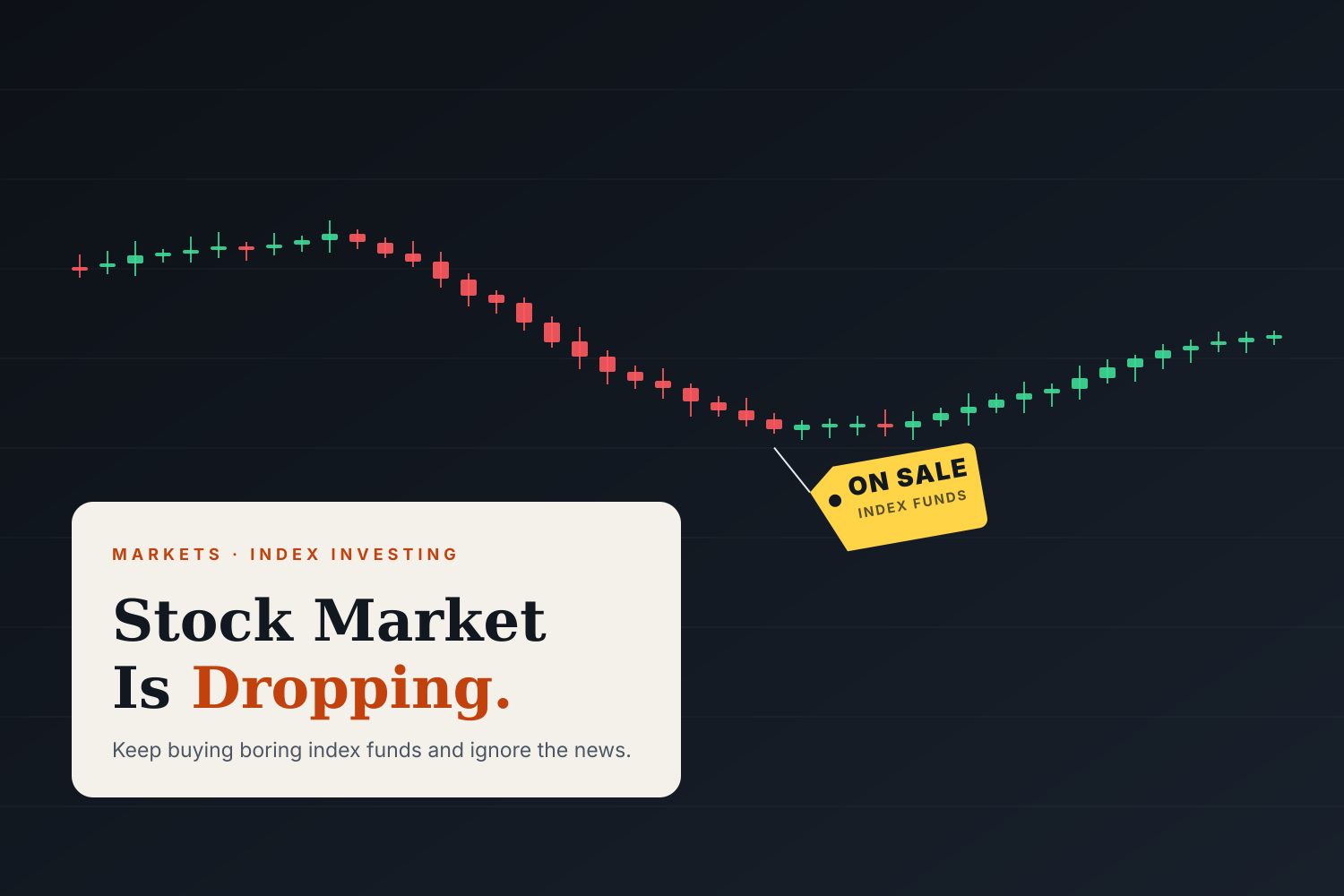
What does this mean? The stock market is on sale. The next 12 months could be my biggest opportunity yet to grow my wealth over the long term. I can keep contributing to my investment funds and ride the market’s future growth, which will happen.
Will the growth start next week, next month, or next year? I have no idea. But it will grow, because business and commerce will go on for as long as humans walk this planet.
Why I Only Buy Index Funds
Some businesses will die and others won’t. Because I only buy broad, low-cost index funds, the fund cleans itself out. Companies that fail drop out of the index, and the winners grow into a bigger share of it. With the click of a button, I’m diversified across large-cap, mid-cap, and small-cap stocks around the world.
It’s a boring approach to building wealth, which is exactly why it works.
As soon as you start adding call options, puts, and the like, you’re adding complexity. I see day trading as trying to manage too many factors you can’t control. You could get lucky, unlucky, or a little of both.
My Investing Philosophy
I believe the world economy will keep chugging along. I believe it will still be here in 100 years, and I want to own a piece of it. It won’t look like it does today, and that’s fine. Owning the index helps manage that risk. I’m not worried about what the market does in the short term.
Short-term performance only matters if you’re living off your portfolio, and I won’t be for many years. So for the next several decades, I’ll keep investing in the stock market, whether it’s rising or diving, and I’ll win over the long term.
I’m also going to ignore the mainstream news so I always feel well rested. 🙂
What Actually Happened Next
Two weeks after I wrote this, the S&P 500 bottomed out, down about 34% from its February peak. It felt like the world was ending.
By August 2020, just five months later, it was back to an all-time high.
Anyone who panic-sold in March locked in the loss and missed the recovery. Anyone who kept buying, like I said I would, bought at some of the best prices of the decade. Then 2022 brought another bear market, and the same lesson played out all over again.
Nobody predicted the bottom. The plan didn’t require it. Keep buying through the panic. That was the whole strategy, and it worked.
How I Think About It Today
Six years later, the core philosophy hasn’t changed. Boring index funds, bought consistently, held for decades. But a few things have evolved:
1. Stocks went from side dish to main course
In 2020, real estate was my main wealth engine, and stocks were the long-term supplement. Today, it’s flipped. I’m not buying more rentals. My taxable brokerage account is now my primary vehicle for closing the gap to financial independence. New money goes into index funds every month I can manage it.
2. I take international seriously
I said “globally diversified” in 2020, but my portfolio has been heavily weighted toward U.S. stocks. Today I deliberately split new contributions between a total U.S. market fund and a total international fund. The U.S. has had an incredible run, but nobody knows which region will lead the next decade. Owning both means I don’t have to guess.
3. Total return over chasing income
I used to think of myself as an income investor. I loved the idea of dividends and cash flow. I still love income from my rentals. But in my brokerage account, I’ve moved toward a total-return mindset: own the whole market, let it grow, and don’t contort the portfolio just to squeeze out a higher yield.
That’s also why I still stay away from options strategies like covered calls. They promise extra income, but you give up upside in exchange, which is exactly what you don’t want in a market that eventually recovers. Complexity is still a red flag for me.
4. Dry powder matters more when you’re self-employed
In 2020, I had a steady paycheck, so “keep buying no matter what” was easy. Now that I run my own business, my income can swing. So I keep a healthy cash cushion in a Treasury bill fund that earns a decent yield. That cash means a bad month in business never forces me to sell stocks at the wrong time, and it gives me dry powder to buy when the market drops.
What I’d Tell 2020 Me
- You were right. Keep buying. The panic is temporary. The recovery isn’t.
- Buy more international than you think you need.
- Build a bigger cash cushion than you think you need. Your income won’t always be as steady as it is today.
- Keep ignoring the news. Still the best investing advice on this blog.
The market will drop again. When it does, I’ll be doing the same thing I did in March 2020: buying, and sleeping well.
I’m not a financial advisor. This is my own approach, not advice for your situation.
Leave a Reply