I wrote the first half of this post in 2020, laying out my rental strategy for the next few years. Rebuilding this blog in 2026, I figured the most useful thing I could do was grade my own plan. Here’s what I thought would happen, and what actually did.
The 2020 Plan
I spent time writing out and thinking through my rental business strategy. I’d figured out a rental model that works in an expensive market while working full time.
Each mortgage payment was growing my equity by about $600 per property. My little real estate business was chugging along.
The plan:
- Build equity in my Northern Colorado properties until each hit a 78% loan-to-value.
- Cash-out refinance and put that money into more cash-flowing real estate, while keeping each property cash flowing $200 to $500 a month after expenses.
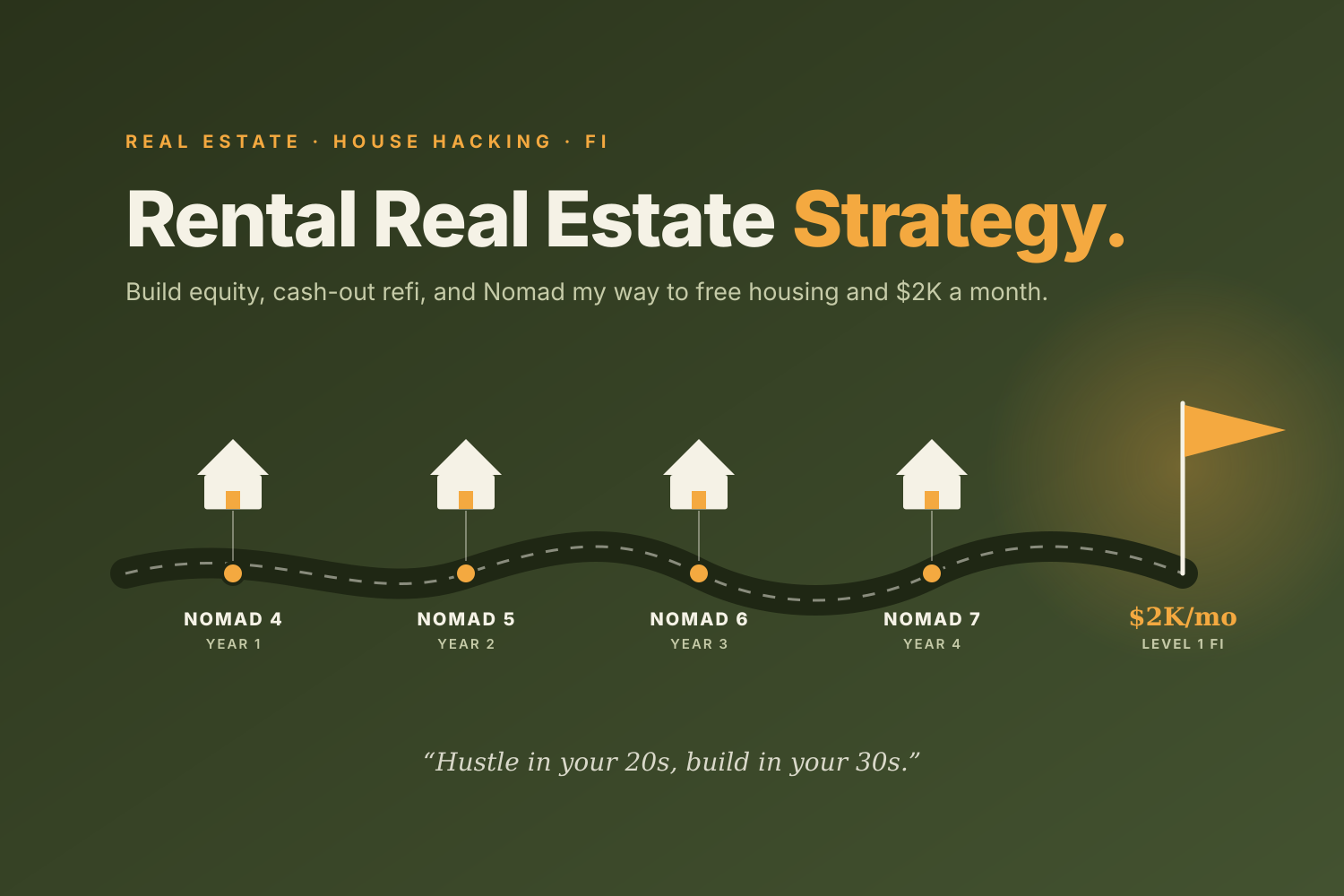
- Nomad house hack my way to properties 4, 5, 6, and 7 over the next 4 years, renting each one out room by room.
- Reach level 1 financial freedom: about $2,000 a month in true cash flow, enough to cover my bills with free housing, no personal bad debt, and some savings once my SUV and student loans were paid off.
I was sticking to what I knew: house hacking and self-management.
My goal at 27 was financial independence by 34 through real estate. By then, I expected close to $1M in equity, plus a solid paper asset portfolio compounding in the background for old age, while I lived on rental cash flow.
It lined up with a piece of common wisdom: “Hustle in your 20s, build in your 30s.”
My 20s were all about hustling: learning, growing a career I saw a future in (digital marketing and sales), networking, and taking big risks (two rentals). Entering my 30s, the focus would shift to building: business systems with strong rental cash flow, a location-independent online business, and a steadily growing paper asset nest egg.
Where I Actually Am in 2026
I’m 36 now. Here’s the honest scorecard.
Nomad properties 4 through 7: Didn’t happen
I stopped at three properties. I don’t have plans to buy more rentals. Instead, my strategy shifted toward building my stock portfolio, mainly broad U.S. and international index funds in a taxable brokerage account.
Why? A few reasons. Prices and rates went up a lot after 2020, which made new deals much harder to pencil out. Self-managing three properties turned out to be plenty. And I learned that stocks give me something rentals don’t: growth with zero tenant phone calls.
The cash-out refinance: Didn’t happen, and I’m glad
All three properties have fixed-rate mortgages under 4%. When rates jumped, a cash-out refi would have meant trading cheap debt for expensive debt. Holding those low-rate loans turned out to be one of the best financial decisions I never had to make. Sometimes the best move is no move.
Self-management: A hard lesson
In 2020, I was worried about tenants not getting along. The reality was worse. I let bad tenants take over one of my properties, and they did a lot of damage. It was hard, scary, and expensive. I got through it, signed a 12-month lease with a great family, and the property still cash flows. But it taught me that self-management is only as good as your screening, and that reserves aren’t optional.
Full-time job: Gone
The 2020 plan assumed a steady W-2 job would fund everything. The W-2 path didn’t last. I’ve now been self-employed for over a year, running my own performance marketing business. I lost the steady paycheck the plan depended on, but the rentals and the portfolio are a big part of why I could afford to bet on myself.
Financial independence by 34: Partially
I didn’t hit the exact plan, but I got somewhere I’m proud of. My invested portfolio, rental equity plus stocks, crossed seven figures. I’m Coast FI: if I never invested another dollar, compounding should still carry me to a comfortable retirement. My rental cash flow covers a baseline floor, and my brokerage account is the growth engine.
What I didn’t account for in 2020: my lifestyle grew. $2,000 a month was my “level 1” number back then. My actual life today costs more than that. That’s not a failure. It means my definition of “enough” grew with my life, and my new target is a higher, more realistic monthly number from rentals and dividends combined.
The online business: In progress
Still building. My current goal is an online business that pays me at least $10,000 a month, so I never have to go back to a W-2 job.
What I Got Right
- House hacking early. It was the single best decision of my 20s. It got me into three properties without inherited money.
- Locking in cheap, fixed-rate debt. Those sub-4% mortgages are gold.
- Building a paper asset portfolio alongside real estate. It ended up becoming the main engine.
- “Hustle in your 20s, build in your 30s.” Still true.
What I Got Wrong
- Assuming the job would always be there. Never build a plan that depends on one employer.
- Underestimating management risk. One bad tenant can wipe out years of cash flow from that property.
- Planning like the market would stay the same. 2020 rates and prices were a moment, not a forever.
- Setting my “enough” number too low. Plan for the life you’ll want at 35, not the one you can tolerate at 27.
The Updated Strategy
- Hold the three rentals, keep the cheap debt, and let tenants keep paying them down. They should be paid off by my mid-50s.
- Keep bigger reserves than I used to think I needed.
- Put new money into index funds, U.S. and international, as the main growth engine.
- Grow the business to the point where my income is fully in my own hands.
Back in 2020, I predicted my thinking would look very different in 5 years. It does. The plan changed. The mission didn’t.
Make the plan, work the plan, then be honest enough to grade it.
Leave a Reply