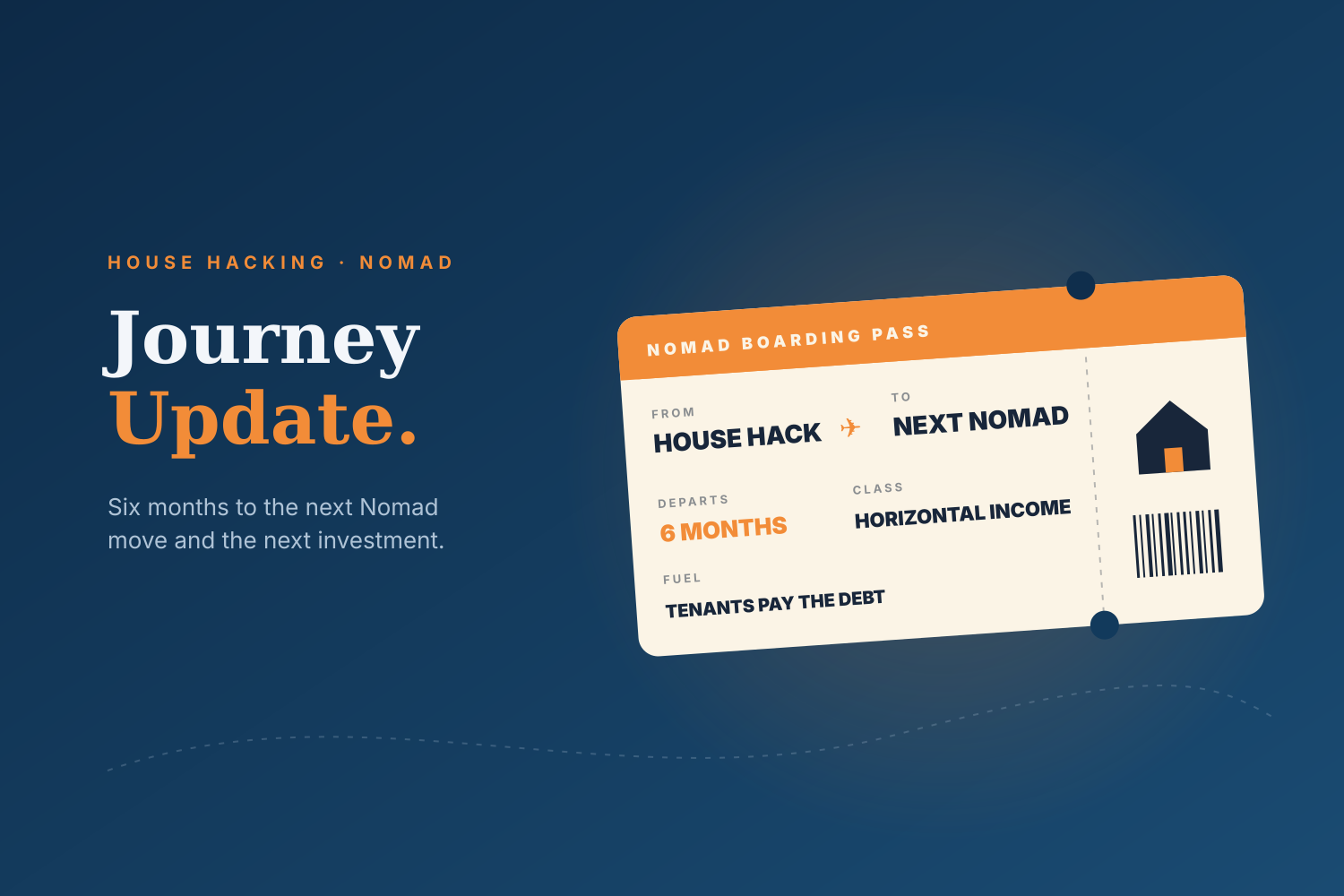
I’m about 6 months away from my next nomadic adventure and my next real estate investment. Here’s a quick update on where I am, what I’m thinking, and why I’m choosing a path that most people my age wouldn’t.
The Rise of the Digital Nomad
The digital age has introduced a new way for humans to live, and it has a name: digital nomads.
You can own a tech-driven business and travel wherever you want. You can also own a real estate portfolio and operate it digitally, with online rent collection, virtual showings, remote property management, and a good team on the ground. Both paths are absolutely possible in this technology-first age.
COVID has only sped this up. More and more businesses have been forced online, which means more people are connected through computers and smartphones than ever before. Offices are empty, meetings are on video, and companies are finding out that a lot of work doesn’t need a desk in a specific building.
For anyone building a location-independent life, that means more opportunity. The world just proved, in a matter of weeks, that remote work can work.
Why I’m Still House Hacking
I haven’t earned a place of my own yet. It’ll be at least another year and a half before I even consider living on my own, and even then, I may decide not to.
The house hacking model is simply too lucrative and too logical for someone my age with no dependents. Yes, living with roommates I barely know isn’t what most people would choose. But it’s one of the most effective strategies I know of to:
- Build wealth faster. Rent from roommates and tenants covers most or all of my housing cost.
- Gain landlord experience. I learn property management firsthand, with training wheels on.
- Lock in low-interest mortgages. Owner-occupied loans come with lower down payments and better rates than investment property loans.
- Keep my savings rate high. Every dollar I don’t spend on housing is a dollar I can invest in the next deal.
It’s a short-term sacrifice for a long-term payoff. A few years of less privacy in exchange for a lifetime of more freedom feels like a great trade to me. Most of my friends are paying someone else’s mortgage. My roommates are paying mine.
Good Debt vs. Bad Debt
A lot of people follow Dave Ramsey’s rules and avoid debt completely. I respect that approach, especially for anyone digging out of credit card or consumer debt. Ramsey has helped millions of people get their finances under control.
But I think the no-debt-ever crowd misses one important thing about real estate: your tenants are paying off your debt.
An investor uses low-interest debt to take ownership of an income-producing asset, building what I call horizontal income. That’s income that grows wider over time across multiple properties and sources, instead of relying on one vertical paycheck.
Here’s how I think about the difference:
- Bad debt buys things that lose value and cost you money every month: cars, vacations, and stuff on a credit card.
- Good debt buys assets that produce income and ideally grow in value, where someone else’s rent covers the payment.
That said, leverage cuts both ways. Too much debt, thin cash flow, or no reserves can turn a good deal into a nightmare fast. I always want positive cash flow, a healthy emergency fund, and fixed-rate financing so a bad month doesn’t become a crisis.
The Cost of Waiting
In an expensive market like mine, I can’t afford the opportunity cost of waiting until I have enough cash to buy a property outright. By the time I saved up that kind of money, prices would likely be much higher, and I’d have missed years of cash flow, loan paydown, and appreciation.
If I followed that strategy, I might as well do what everyone else does: max out my 401(k), hope the stock market rewards me, and wait until I’m 65 and no longer working to enjoy the results.
No thanks.
To be fair, the stock market is a great tool, and I invest there too. A 401(k) with an employer match is free money, and index funds are one of the simplest ways to build wealth. My point is that I don’t want my entire future to depend on one account and one retirement date. I want multiple streams of income working for me much sooner than 65.
Knowledge Work and Physical Work
My life’s work centers around two domains: knowledge work and physical work. I enjoy both, and I’m good at both.
- Knowledge work is digital marketing, strategy, and building online businesses. It can be done from anywhere with a laptop and Wi-Fi.
- Physical work is real estate: finding deals, improving properties, and managing the hands-on side of being a landlord.
The two feed each other. My marketing income funds my real estate down payments. My real estate builds long-term wealth and cash flow that gives me more freedom in my business. And the nomadic lifestyle is possible because both can increasingly be run from wherever I happen to be.
Building a Legacy
When you spend your life investing in horizontal income, you’re not just building wealth for yourself. You’re building a legacy that can be passed down to your kids, their kids, and so on.
That’s the bigger picture for me. Not just early freedom for myself, but a strong financial foundation for the generations after me that I didn’t have growing up.
What’s Next
Over the next 6 months, my focus is simple:
- Keep my savings rate high and build up the down payment for the next property.
- Keep my current properties full with great tenants.
- Grow my digital marketing income so it can support more travel.
- Plan my next nomadic adventure, safely, once the world opens back up.
- Keep learning, writing, and sharing the journey here.
It’s a strange time in the world, but I’ve never been more sure about the path I’m on. Stay healthy, stay patient, and keep building. I’ll check back in with another update soon.
Leave a Reply