A few notes on real estate, the macro economy, and why it’s getting harder for regular people to build wealth, plus what I think you should do about it.
Real Estate: Cash Reserves Are Non-Negotiable
If you’re going into real estate, you need cash reserves. When the market goes soft, it costs money to find tenants and fill vacancies.
We don’t like vacancies! I hate them, and when one comes up, it’s a priority in every sense of the word.
How much should you keep? My rule of thumb is 6 months of PITI (principal, interest, taxes, and insurance) for every property. That covers a long vacancy, a surprise repair, or a tenant who stops paying, without you panic-selling or draining your personal savings. It’s boring money sitting there. Good. Boring money is what lets you sleep at night.
With investing in general, the more intelligent risk you can take on, the better positioned you’ll be to have more fun and make more money. Reserves are what let you take that risk without blowing yourself up.
Who Really Runs the Economy
Don’t forget that the macro economy is run by a club of corporations, and that club runs the world. Some of the biggest players are Wall Street firms. The finance, insurance, and real estate sector spends hundreds of millions of dollars a year lobbying Washington.
That lobbying influences policymakers to write and pass laws that keep the rich rich and the poor poorer. It’s why there are tax loopholes in every estate and investment portfolio, and tax benefits for business owners. Owners keep getting richer while their workers are paid much less, even though the workers keep the business running.
Employees run the processes and systems the owners built themselves back when they were bootstrapping. And today, a lot of that work can be automated with code and software. That’s why technology is so powerful. A savvy person can bootstrap a six-figure business with zero employees, because the software runs the business while he sleeps.
The Dollar Keeps Losing Value
Since the U.S. left the Bretton Woods system in 1971, the dollar has kept losing value while the cost of everything keeps going up. Said another way: productivity has grown considerably since the 1970s, while pay has stagnated.
The Inherited Wealth Economy
Here’s what the rich don’t want you to know: we’re turning into an “inherited wealth economy.” It’s not simple to get rich anymore.
The old model was: graduate, get a good-paying job, invest for the long term. That model (the boomer and Gen X model) isn’t even working for them anymore. Why on earth would it work for millennials? We need to approach our careers with a new sense of passion and new ways of thinking. If we don’t, life is going to be very dismal indeed.
More and more, the wealthy aren’t wealthy because they earned it. They’re wealthy because they inherited it. That’s oligarchy, and it’s killing effective capitalism.
Capitalism isn’t perfect, but it’s still the best economic model humans have come up with so far.
Why Capital Beats Labor
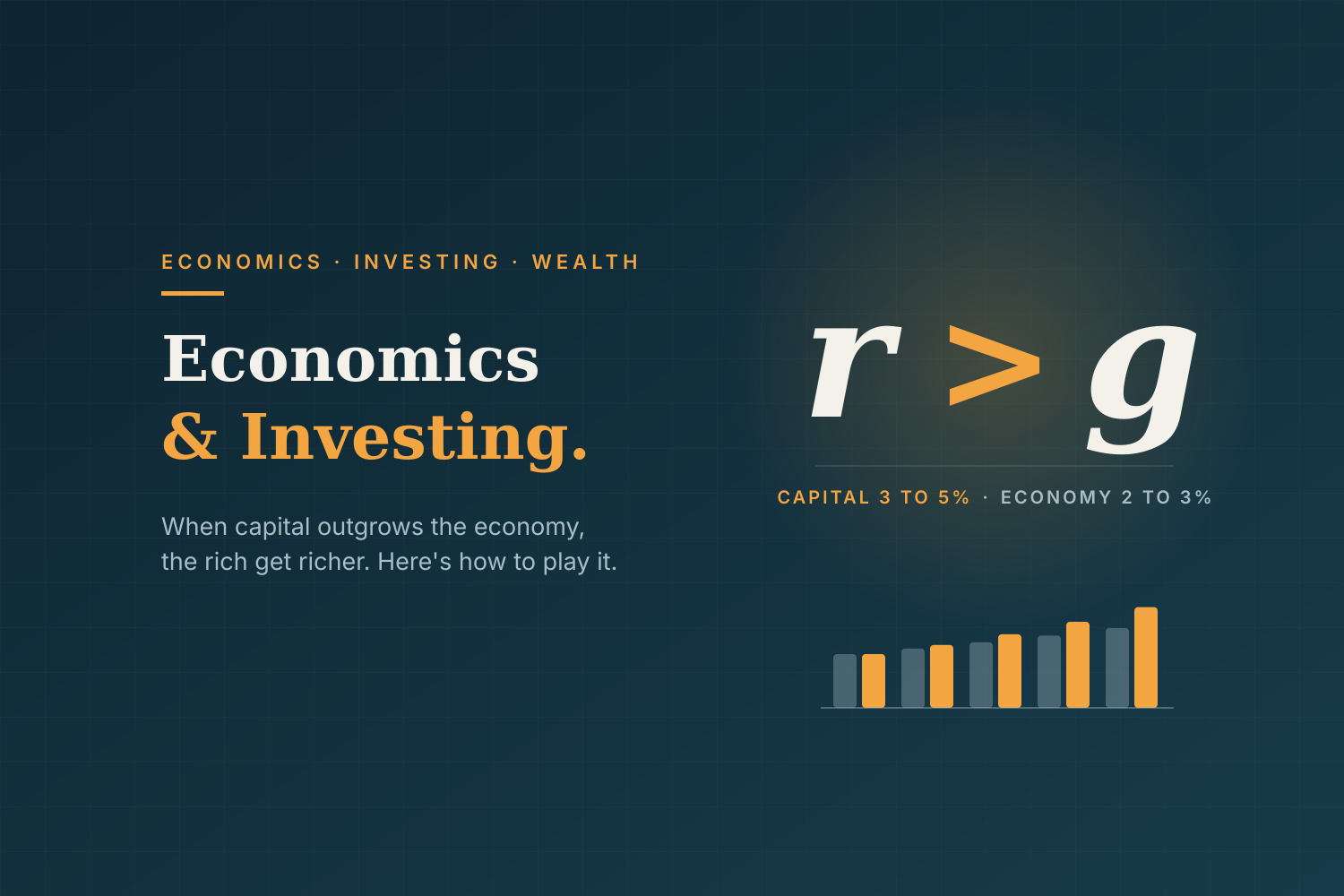
Economist Thomas Piketty’s big idea in Capital in the Twenty-First Century is simple: the return on capital tends to be higher than the growth rate of the economy. Capital returns have historically averaged around 4 to 5% a year, while the economy grows around 1 to 3%.
What does that mean in plain English? People who own assets get richer faster than people who only earn a paycheck. So to live well, you need to put away big chunks of money so it can grow and grow. Then when you pass it on to your kids, they have an even longer time horizon to build on it. The result? Dynasties.
Capital ends up in the hands of a few people, who can buy influence in the political system to reinforce their own agenda. “The rich get richer.”
I’ve read that we may one day look back with nostalgia on the early 21st century, when we all believed the wealthy had earned their wealth. We claim all men are equal, but it’s rubbish. The American economy is moving toward an oligarchy, just like old Europe.
So What Do You Do About It?
Complaining about the system won’t change it. Here’s the good news: if capital beats labor, then the answer is to become a capital owner as fast as you can. You don’t need to inherit wealth to join the owner class. You need a plan and a lot of discipline.
- Own assets, not just a job. Rental real estate, index funds, a business. Your paycheck is the fuel. Assets are the engine.
- Start early. Compounding is the one advantage time gives regular people. Every year you wait is a year you can’t get back.
- Use the same tax rules the rich use. Depreciation on rentals, business deductions, and retirement accounts aren’t loopholes reserved for billionaires. They’re available to anyone who owns assets or a business.
- Build things that run without you. Software, systems, and good property management let you earn while you sleep.
- Invest in your own skills. In an economy that rewards owners, the most valuable asset you’ll ever own early on is your own ability to earn, sell, and build.
The game may be rigged toward people who already own capital. Fine. Then the move is obvious: stop playing as labor only, and start owning.
Leave a Reply