From my digital marketing agency experience log.
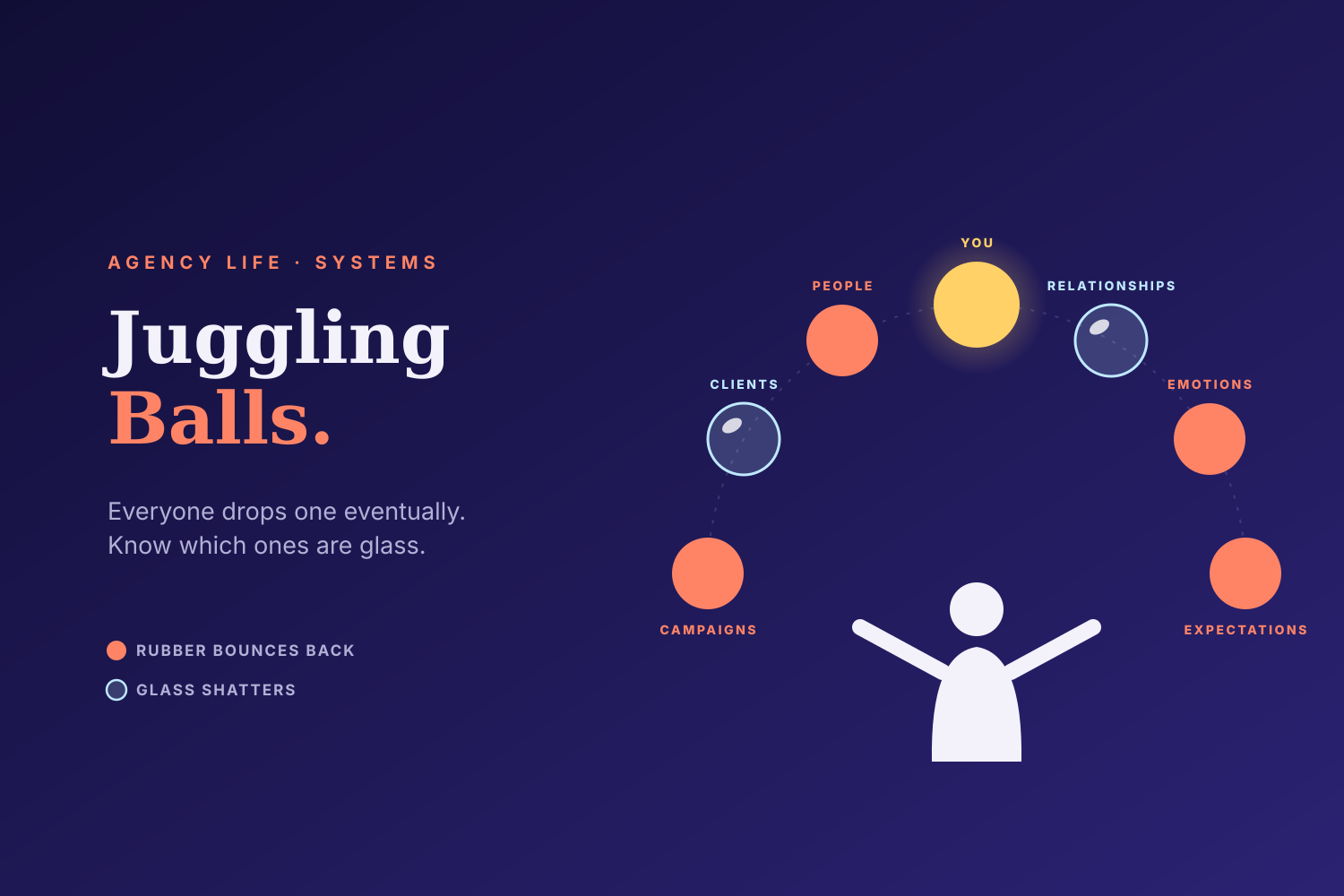
Juggling balls is the life of every successful entrepreneur and executive. Managing people, relationships, clients, emotions, campaigns, and expectations, all at the same time. Load up the responsibilities, baby!
Agency life is one of the best training grounds I know for learning how to juggle. You’re managing multiple clients across different industries, each with its own goals, personalities, budgets, and fires. If you can handle that, you can handle almost anything in business.
The Balls in the Air
On any given day at an agency, you might be juggling:
- Clients: calls, emails, reports, and the occasional emergency.
- Campaigns: launches, optimizations, budget changes, and creative refreshes.
- People: teammates, designers, developers, and your boss.
- Relationships: keeping trust high with every client, even the ones you’re not talking to this week.
- Emotions: yours and theirs, especially when results dip.
- Expectations: making sure everyone knows what’s happening and when.
The trick isn’t to never drop a ball. Everyone drops one eventually. The trick is knowing which balls are glass and which are rubber. A rubber ball bounces back. A glass ball, like a major client relationship or a tracking error on a big launch, shatters.
Learning From Split Accounts
One of the best learning opportunities I had early on was splitting accounts with senior executives. The agency paired newer account managers with seasoned pros on shared clients to improve client retention across the whole team.
I was all for it. It meant working in the trenches every day with some of the best people in the company: experienced, six-figure earners who led large teams and had been doing this for years.
When you’re splitting an account with a senior, study everything:
- How they build rapport. What do they talk about before getting to business?
- How they run their book. How do they prioritize when ten clients need something at once?
- How often they check in. What’s their monthly rhythm with each client?
- How quickly they respond. Is it minutes, hours, or end of day?
- Email or call. When do they pick up the phone instead of typing?
- How they deliver bad news. This one tells you the most.
You’ll pick up more in a few months of watching a pro up close than in years of figuring it out alone.
Surround Yourself With the Best
If you can fill your life with more experiences like that, focused, intense, and surrounded by the best of the best doing their thing, how can you not grow into a better version of yourself?
Your environment shapes your standards. When the people around you are operating at a high level, your idea of “normal” rises with them. You start answering faster, thinking bigger, and holding yourself to tougher standards without even noticing. The opposite is true too. Spend your days around people who coast, and coasting starts to feel normal. Choose your environment on purpose.
How I Keep the Balls in the Air
Juggling a full book of clients takes systems, not just hustle. Here’s what works for me:
- Get everything out of your head. Every task, deadline, and follow-up goes into one system, whether that’s a project management tool or a simple list.
- Plan the week on Monday. Look at every client and decide what each one needs before the week gets away from you.
- Protect deep work time. Block time for campaign analysis and strategy, not just meetings and emails.
- Batch the small stuff. Answer emails and messages in focused blocks instead of all day long.
- Know your glass balls. Biggest clients, launches, and anything involving tracking or budget get extra attention.
- Set expectations on response time. Clients relax when they know when to expect an answer.
- Use automation. Let tools handle the repetitive work so you can focus on thinking.
When a Ball Drops
It will happen. A report goes out late, a budget overspends, a client email slips through the cracks. Here’s how I handle it:
- Own it fast. Tell the client before they find it, and skip the excuses.
- Fix it first, explain second. Show what you’ve already done to make it right.
- Find the root cause. Was it a process gap, too much on your plate, or a missing check?
- Build a guardrail. Add a checklist, alert, or reminder so it doesn’t happen again.
Handled well, a dropped ball can actually strengthen a client relationship. People remember how you respond far more than the mistake itself.
Juggling in 2026
Since I wrote this, the juggling has changed a lot. Today I run my own agency, so the balls belong to me. There’s no senior to split accounts with anymore. Now I’m the one other people learn from.
The tools have changed too. AI now handles a big chunk of the work that used to eat up an account manager’s week: pulling reports, spotting performance changes, drafting ad copy, and summarizing meetings. That frees up time for the things that matter most, like strategy, creative ideas, and real conversations with clients.
But AI didn’t remove the juggling. It changed which balls you hold. Less time on manual tasks, more time on judgment, relationships, and decisions. Those were always the glass balls anyway.
Don’t Drop Yourself
One more lesson I learned the hard way: you are one of the balls. If you burn out, everything else falls.
Sleep, exercise, time with people you love, and real time off aren’t luxuries. They’re what keep you sharp enough to juggle well. The best executives I worked with weren’t the ones who never stopped. They were the ones who knew how to recharge.
The Beautiful Cycle
As you develop, you’ll earn more money, own more assets, make more fun friends, improve your social circle, and get introduced to new and lucrative business opportunities. What a beautiful cycle. It just spins and spins.
So load up the responsibilities. Learn from the best people you can find. Build systems that keep you organized. Protect the glass balls, and take care of yourself along the way. That’s how you get really good at the juggling game, and how you keep enjoying it for years.
Leave a Reply