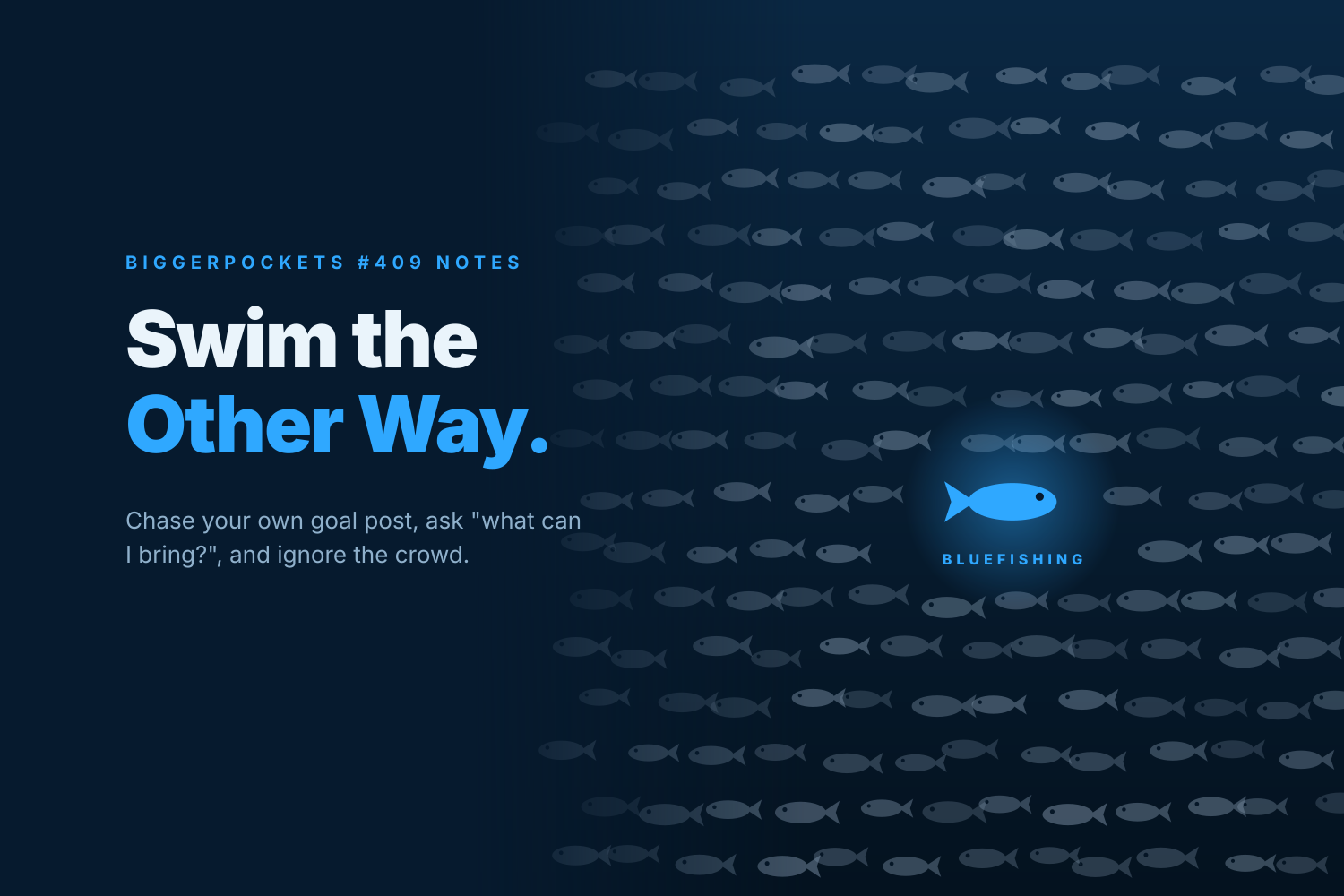
BiggerPockets Podcast episode 409 featured Steve Sims, author of Bluefishing: The Art of Making Things Happen. Steve went from bricklayer to nightclub bouncer to founding a luxury concierge business that makes wild dreams come true for wealthy clients. Think dinner at the feet of Michelangelo’s David.
It was one of the most unfiltered episodes BiggerPockets has ever aired, and one of my favorites. Here are my notes, plus my own take on each.
What Is “Bluefishing”?
Bluefishing is a mindset. A mentality of doing things differently. While everyone else is fishing for the same common fish in the same crowded pond, you go looking for the rare one nobody else is chasing.
My take: This is the whole reason this blog exists. The default path (college, job, 401(k), house, 40 years of grinding) is crowded. The bluefish is in the less obvious places: house hacking, building your own business, owning assets in your 20s while everyone else is financing a new truck.
Agitated Oysters Make Pearls
A pearl only forms when something irritates the oyster. No friction, no pearl.
My take: Every meaningful thing I’ve built came out of discomfort. Getting fired from my first job pushed me into digital marketing. Getting laid off led to a better job in 7 days. A contractor robbing me taught me how to vet contractors. If you’re agitated right now, good. Something’s forming.
Control Your Front Door
As a business owner, control your front door. If you control who comes in, you eliminate about 99% of your problems.
My take: This might be the most practical business advice in the whole episode. It applies everywhere:
- Clients: One bad-fit client can eat the time of five good ones. Screen on the sales call, not after the contract is signed.
- Tenants: A great tenant is the asset. A bad one can wipe out years of cash flow. Screening is everything.
- Partners and hires: Slow down before you say yes. It’s much easier to keep someone out than to get them out.
Steve learned this as a bouncer. The bouncer’s whole job is the front door, and a good one prevents the fight from ever starting inside.
People Don’t Get Violent When They’re Smiling
Another bouncer lesson. Humor and warmth defuse tension better than force.
My take: Same goes for an angry client call or a tense tenant conversation. Lead with calm, warmth, and a little humor, and most fires shrink on their own.
Naysayers Are Protecting Their Own Choices
Nine times out of ten, when someone tells you it can’t be done, they just want you to make the same decision they made. It validates their own choices. They don’t want to see you win, because your win makes them question their path.
Related: rich people will laugh at you before they applaud you. Expect the laughter. It’s part of the process.
My take: If you’ve ever house hacked or gone out on your own, you’ve heard it. “Why would you live with roommates when you can afford your own place?” “Why would you give up a steady paycheck?” Consider the source before you take the advice. Is this person where I want to be? If not, their “that’ll never work” is just their story, not yours.
Pull Out Your Sherlock Holmes
Nine times out of ten, the problem is you. The client doesn’t know what they don’t know. That’s your job to figure out.
Don’t just give the client what they ask for. Pull out your Sherlock Holmes and find out what they actually need.
“Why” is the most confrontational word in the English language, but it gets to the core. And you need to get to the core to deliver the right solution. Give the client what they need, desire, and lust for.
My take: In marketing, this happens constantly. A client says, “I need more website traffic.” Ask why. “Because sales are down.” Why? “Because we lost our biggest customer and need to replace that revenue by Q3.” Now you know the real goal isn’t traffic. It’s replacing a specific amount of revenue by a specific date. That changes the entire strategy.
A few “why” questions I use on sales calls:
- Why now? What changed that made you reach out?
- Why does that number matter to you?
- What happens if this problem doesn’t get solved in the next 6 months?
- If we nailed this, what would that change for you personally?
Remove the Problem, Don’t Admire It
Most people look at a problem and wonder why it’s there, instead of just solving it. Rich people look to pay their way out of problems. They buy back their time.
My take: It’s tempting to burn an entire weekend DIY-ing something a pro would finish in two hours. Sometimes the smartest move is to write the check and get back to the work only you can do.
Stop Chasing Someone Else’s Goal Post
Today we chase other people’s goals and dreams, and social media fuels it. It exists to show you how inadequate you are. “I’ll be happy when…” never comes, because “till then” never arrives. Successful people don’t give a shit about any of that. Social media isn’t real, and you shouldn’t consume it like it is.
You can never reach someone else’s goal post. But you can reach yours, if you know exactly what your goal is and what it looks like.
Aspirational Marketing Is Selling a Fantasy
The higher the price, the more aspirational the world you’re buying into. “Spend this, and you’ll become this.” It’s falsifying reality.
My take: As a marketer, I know exactly how this works, because it works. Luxury brands don’t sell watches or handbags. They sell identity. Knowing that is a superpower as a consumer. The next time you feel the pull to buy something expensive, ask: am I buying the thing, or am I buying who I think it’ll make me? The second one never delivers.
AI Will Eliminate Transactional Businesses
You must create and design. Steve’s point: AI will wipe out businesses built purely on transactions. What it can’t replace is human creativity, relationships, and the ability to make things happen.
My take: This aged incredibly well. Rereading these notes years later, with AI now handling a lot of the button-pushing work in marketing, his warning looks like a prophecy. The answer is the same as he said: build skills in judgment, creativity, and relationships, the layers above what a machine can do.
Always Ask: “What Can I Bring?”
To build solid relationships, always ask: what can I bring to the table? Ask it every time you form or grow a relationship.
You look after yourself by looking after someone else.
My take: Most networking is people asking “what can I get?” Flip it and you instantly stand out. For me, that can mean a free marketing audit, an intro to someone in my network, or passing along a deal I’m not going to take. Give first. It comes back.
The Bottom Line
- Go bluefishing. Do what others won’t.
- Let friction make you a pearl.
- Control your front door.
- Ignore the naysayers protecting their own choices.
- Ask “why” until you hit the core.
- Chase your own goal post.
- Create what AI can’t.
- Always bring something to the table.
If you haven’t read Bluefishing or heard episode 409, go do it. Fair warning: Steve doesn’t filter his language. Neither do I.
Leave a Reply