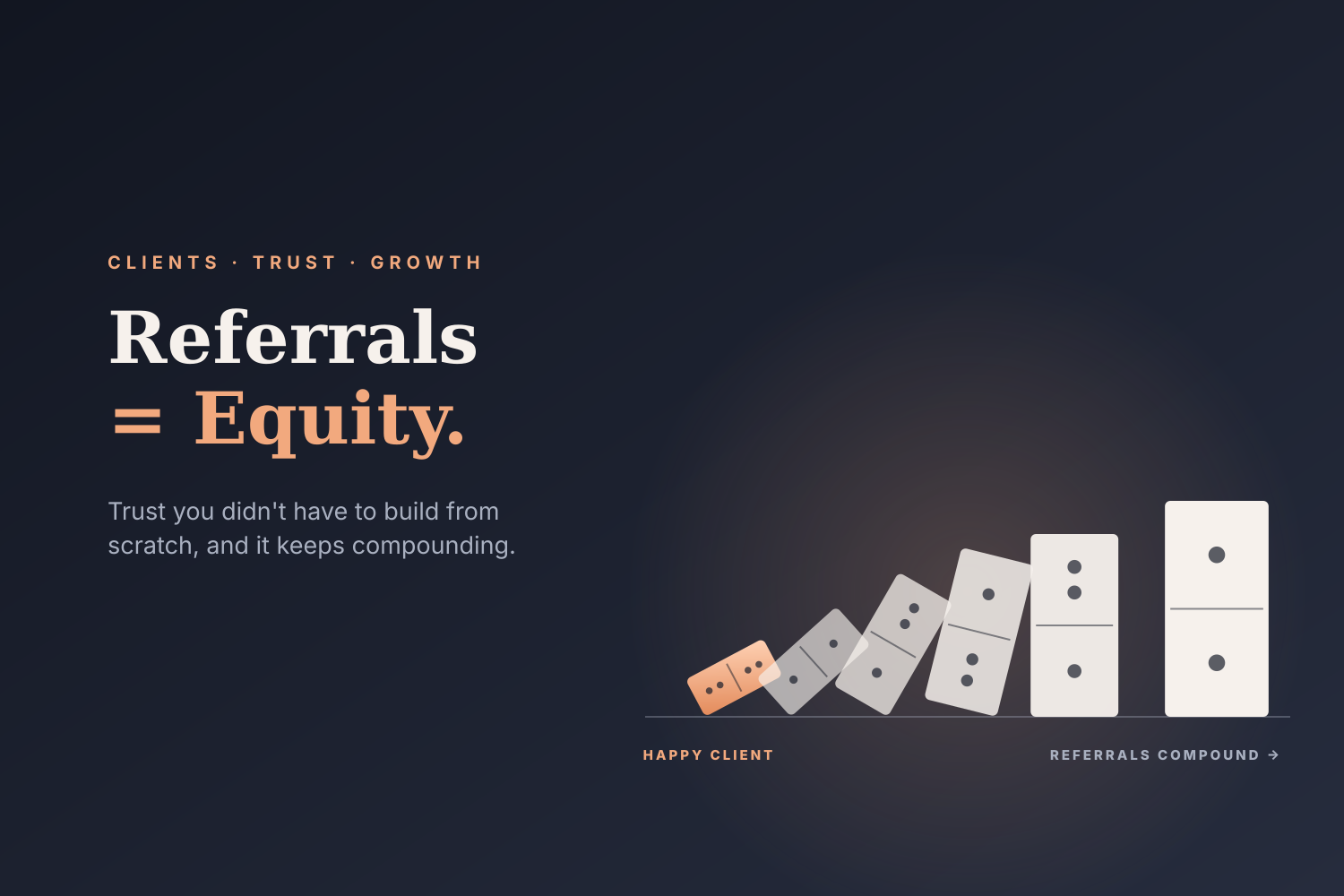
Referrals = equity. And everyone loves equity.
Referral clients are how effective marketing professionals, or any professionals for that matter, grow their book of business. These are the magic clients. They were literally recommended to you by someone who already trusts you.
That matters, because trust is the hardest step to overcome in business. With a cold lead, you have to earn it from scratch. With a referral, someone else already vouched for you before you ever said a word.
Why Referrals Are So Powerful
Think about how you choose a dentist, a contractor, or a restaurant. You probably ask a friend before you trust an ad. Surveys on consumer trust consistently find the same thing: people trust recommendations from people they know far more than any form of advertising.
Referral clients tend to:
- Close faster. They’ve already heard good things, so the sales cycle is shorter.
- Cost less to win. No ad spend, no cold outreach, no long nurture sequence.
- Stay longer. They start the relationship with trust, which makes retention easier.
- Refer others. Happy referral clients often become your next source of referrals.
That’s why I call referrals equity. Every great client relationship you build is an asset that keeps paying you back. And unlike ad spend, it doesn’t disappear the moment you stop paying for it. A happy client keeps talking about you for years.
Onboarding Builds Instant Trust
Strategic, well-orchestrated onboarding is another way to get clients to trust you almost immediately.
From the client’s perspective, your company looks like it has it all together. They walk away from the first week thinking, “These people know what the hell they’re doing.” You want more of that feeling. It’s the foundation every future referral is built on.
Great onboarding usually includes:
- A clear welcome. A kickoff call, a simple agenda, and introductions to everyone they’ll work with.
- A written plan. Goals, timelines, and how success will be measured, all in one place.
- Fast setup. Get access, tracking, and accounts sorted quickly, without making the client chase anything.
- An early win. Fix something, launch something, or find something useful in the first couple of weeks.
- A regular rhythm. Set the check-in schedule so the client always knows when they’ll hear from you.
Clients don’t refer you because of one great month. They refer you because the whole experience, from the first call on, felt professional and easy.
Referrals Are Proof You’re Good
Getting referrals is a sign you’re good at what you do. Nobody puts their own reputation on the line to recommend someone who is mediocre.
That feels good. It also looks really good to your peers, your management, your partners, and your existing clients. A steady stream of referrals tells everyone around you that your work is worth talking about.
How to Earn More Referrals
Referrals aren’t just luck. You can set up the conditions for them to happen more often:
- Deliver results first. Nothing replaces great work. Referrals follow results.
- Ask at the right moment. The best time to ask is right after a win, when the client is happiest.
- Make it easy. Tell clients exactly who you’re a good fit for, so they know who to send your way.
- Build referral partners. Connect with people who serve the same clients you do but don’t compete with you, like CRM consultants, web developers, accountants, and business brokers. Send them business, and they’ll send you business.
- Say thank you, every time. A personal note, a gift, or a referral fee shows you value the trust they gave you.
- Close the loop. Let the person who referred you know how it went. People love hearing that their intro worked out.
Treat Referral Clients Like Gold
When a referral client signs on, remember that two relationships are now on the line: yours with the new client, and the trust between them and the person who sent them.
If you drop the ball, you don’t just lose one client. You make the person who referred you look bad, and that can cost you both. So give referral clients your A-game from day one. Respond fast, over-deliver early, and keep the person who referred you in the loop. Handle it right, and you’ll turn one referral into a chain of them.
Make It Easy to Vouch for You
Today, a referral rarely ends with a phone call. The person who hears your name usually looks you up first. They check your website, your LinkedIn, your reviews, and maybe ask an AI tool about you.
Make sure what they find backs up what your client said:
- A clear website that explains what you do and who you help
- Case studies or results they can see
- Reviews and testimonials from real clients
- An active, professional LinkedIn profile
A referral opens the door. Your online presence keeps it open long enough to earn the meeting.
It Takes Time to Get There
Growing a business entirely from referrals is a godsend. But it definitely doesn’t happen overnight.
In my experience, it takes about two years of dedicated work on your craft before you start earning the fruits of referral accounts. And that’s only if you work your face off and constantly set up environments that push your knowledge forward: studying the best people, testing new strategies, taking on hard problems, and learning from every win and every mistake.
Without that growth mindset, you may never get there. Or it’ll take 30 years of random experiences that force your brain to grow whether you want it to or not. Why wait for life to teach you slowly when you can choose to learn fast?
The Bottom Line
Referrals are trust you didn’t have to build from scratch. Earn them with great onboarding, great results, and great relationships. Ask for them. Thank people for them. Build partners who send them.
Do that consistently, and one day you’ll look up and realize your whole book of business came from people telling other people about you. That’s the best kind of marketing there is, and it’s the kind of equity that keeps compounding.
Leave a Reply