As I rebuild this blog, I’ve had to reread my writing from several years ago. In general, I think I’ve grown beyond the person and writer I was back in the COVID days. I’ve kept pursuing the things that interest me, along with what I believed were the right business decisions for my career.
So here’s an honest update on where I am now.
A Year and Change of Self-Employment
Today I’m self-employed. I’ve been working for myself for a little over a year, and I’d call it a success:
- My investable net worth has grown.
- I’ve closed new clients.
- I’ve built a real sales pipeline.
- I’ve made it through some very emotionally intense periods.
That last one matters more than people admit. Nobody posts about the 2 a.m. spreadsheet sessions.
The Fear of Selling Assets
My biggest emotional charge right now is earning enough each month. Specifically, not going broke in my business and having to sell assets to cover my cost of living.
That would be a very bad thing. #compounding. Money needs time to grow, and every dollar I pull out early is a dollar that never gets to compound.
The Tenant Nightmare
I also carry anxiety about large, unexpected business expenses, because they’ve happened before. The biggest one was my fault. I let bad tenants take over a property, and they did a lot of damage.
That’s probably the biggest fear any real estate investor, or aspiring investor, has. And I went through it. It was hard and scary, and I wasn’t sure how it would end.
But I got through it. I signed a 12-month lease with a nice family, and the property still cash flows. That’s a success, but I never want to go through it again.
What I’d tell any landlord after that experience:
- Screening is everything. Verify income, call previous landlords (not just the current one, who may want them gone), and trust your gut when something feels off.
- Act fast when things go sideways. Problems don’t fix themselves. Every week you wait, the damage gets more expensive.
- Keep your reserves. The reason I survived it is that I had cash set aside. Reserves aren’t lazy money. They’re insurance.
The Goal: $10K a Month Online
Right now, my work is focused on building my online business. I’m not sure exactly what it will look like yet. (Paul Millerd calls this The Pathless Path.) But my aspiration hasn’t changed: build and operate an online business that pays me at least $10,000 every single month, and never return to the W-2 world unless I absolutely have to.
I believe it’s the most powerful thing I can do for my professional self, because it lets me:
- Work for myself
- Enjoy the work I do every day
- Cover my monthly cost of living without downgrading my lifestyle, while still adding to my stock portfolio every month
That’s a realistic vivid vision.
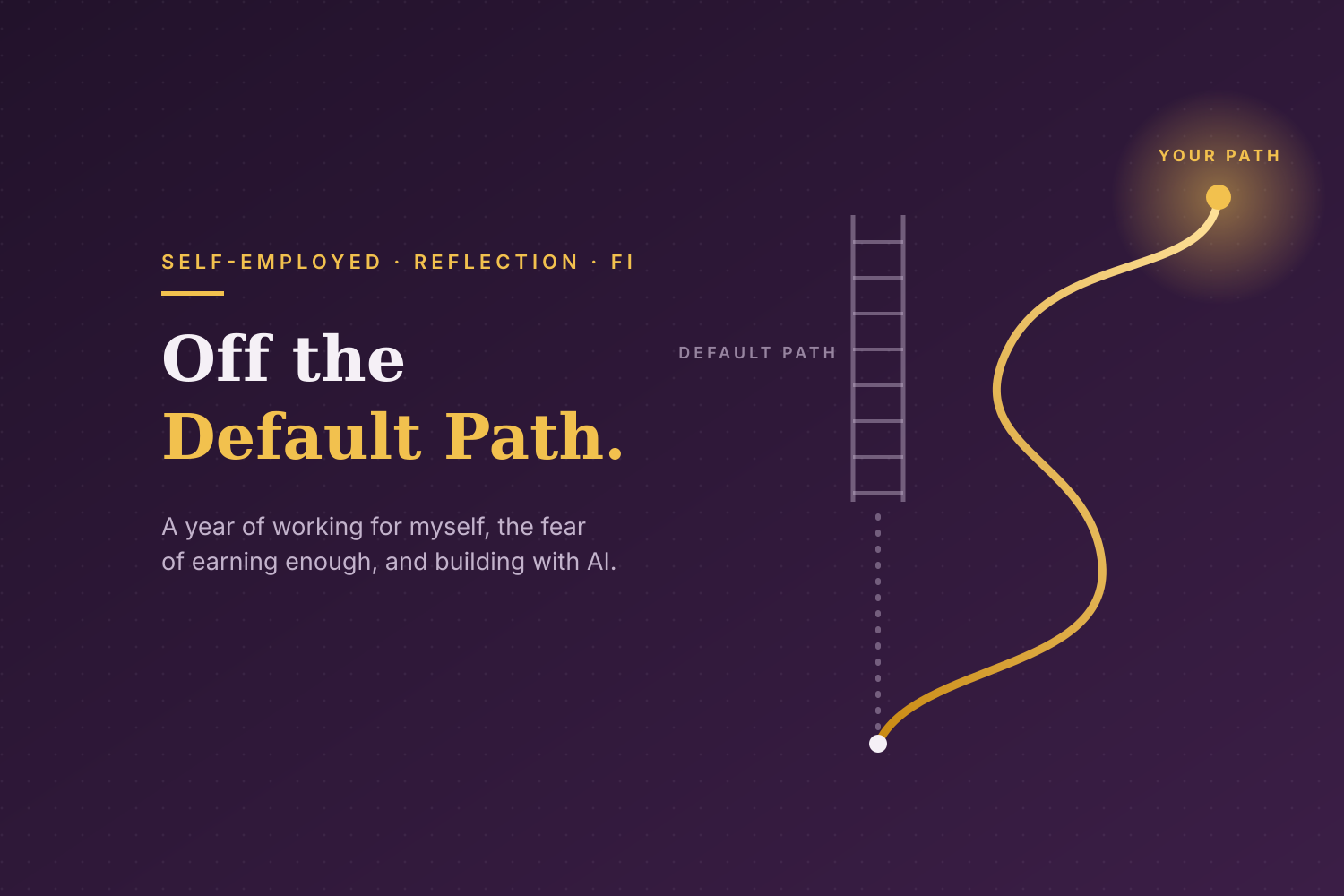
Why the Default Path Didn’t Work for Me
I keep choosing this path because the default path hasn’t worked for me in terms of sustained employment. The boomer advice for career success follows a familiar script:
- Study hard and get into the best college you can.
- Get the best job you can.
- Work hard and climb the corporate ladder while investing in your 401(k).
- Buy a home and raise a family.
- Retire at 65+ on your 401(k) and Social Security.
In my experience, it just doesn’t pan out that way. What’s the boomer advice when employers aren’t loyal to their employees and cut staff the moment cash flow weakens?
Boomers enjoyed a Goldilocks economy from after World War II until the mid-1980s. Workers could buy a nice home on one salary, raise a family, and still invest, because the economy and the businesses in it were growing year over year. I’m speaking in generalities, but that’s not the modern world.
Work With the Robots
We have the internet and AI now. The people building AI can’t even tell us which lines of work will be “safe.” So what the heck is a young person supposed to focus on if a robot can eventually do their job?
My answer: work with the robots now. Get better at managing digital robots in your business. For me, that’s my performance marketing business and my rental business.
The brass-tacks work (data pulls, spreadsheet builds, campaign button-pushing, the classic entry-level jobs) is exactly what AI already handles well. So your professional self needs to go layers beyond that:
- Judgment. AI can pull the numbers. You decide what they mean and what to do next.
- Strategy. Knowing which campaign to run, which property to buy, which client to fire.
- Relationships. Clients, tenants, partners, and referral sources still want a human they trust.
- Taste. Knowing what good looks like, and having the guts to say no to what isn’t.
Let the robots do the reps. You be the coach.
My Mindset Hasn’t Caught Up to My Balance Sheet
Here’s the honest part. I don’t think my thinking and psychology have evolved to where they should be. I’m too anxious about “where will the money come from,” and I’m not savoring the reality I’ve built as a self-employed person.
My invested portfolio is seven figures, diversified across rentals and stocks (domestic and international), with healthy cash set aside as lifestyle dry powder. I’m Coast FI, on track for roughly $4 to $5 million by 60. That should give my soul a resounding reassurance: you’ve already done the hardest part of the economic journey. You built your first million-dollar invested portfolio.
Most people never do that. So why feel anxiety when I’m working toward my dream every day?
My financial position is exactly what allows me to pursue online business ownership in the first place. I’d wager most working people have to work because of the mortgage, the car payment, the credit card debt, and the monthly bills. There’s no room to aspire to something else. The path isn’t clear, it’s risky, and the bills come due at the end of the month. So it makes sense for them to stick with the W-2 grind for the rest of their working lives.
I don’t have that problem. I have the opposite one: I have the freedom, and I’m not letting myself enjoy it.
How I’m Working on It
Knowing the problem is half the battle. Here’s what I’m focusing on:
- Know my runway. Anxiety feeds on vague fears. When I write down exactly how many months my cash covers, the fear shrinks to its actual size.
- Meditate and journal. Watching the anxious thoughts instead of becoming them. The mind is a tool. It is not who I am.
- Track wins, not just gaps. Every new client, every lease signed, every month the bills got paid. Seneca said to continually remind yourself of what you’ve achieved. He was right.
- Separate business months from life outcomes. A slow month in the business is not a referendum on my life.
Finding Guidance Outside the Family
For my whole professional life, I’ve wanted to avoid the default path. It just isn’t who I am. It doesn’t resonate with my soul.
I’m not sure where that comes from. My immediate family have held W-2 jobs their entire lives, so my way of thinking is new to how I was raised. I’ve come to accept that this has separated me from my family on career and money topics. They don’t know how to relate to me there, even though I desperately want them to talk with me about my work, give me guidance and advice.
So I have to fill that void somewhere else. If you’re on a similar path, here’s where I’d look:
- Local meetups for entrepreneurs, investors, and marketers. The right people are in those rooms.
- Peers a few steps ahead of you. Not gurus. People who were where you are two or three years ago.
- Coaches and masterminds, if you can find one that fits.
- Books and podcasts from people who’ve walked the pathless path.
Your family can love you without understanding your work. That’s OK. Love them for who they are, and build your board of advisors somewhere else.
Onward
That’s where I am. Not finished, not broke, not perfect. Building, every day, toward the life I actually want.
The hardest part is done. Now it’s time to enjoy the climb.
Leave a Reply